





In 2026, the world of interior architecture has entered an era defined by calm, connection, and tactile intelligence. The door handle, once a simple piece of metal, has transformed into a central element of home design, balancing aesthetics, ergonomics, and technology. In modern residences, architectural hardware is no longer chosen merely for its function; it’s specified for its feel, finish, and emotional presence within a space.

Quiet Luxury and the Resurgence of Soft Minimalism
Interior design in 2026 is guided by a calm, human-centred philosophy known as Quiet Luxury, a movement that favours subtle textures, natural warmth, and refined understatement over ornamentation. Door hardware reflects this through organic forms and ergonomic contours that rest naturally in the hand.
Instead of angular or industrial silhouettes, homeowners are gravitating toward elliptical levers, rounded edges, and soft symmetry that evoke comfort and tactility. These subtle curves visually soften interiors and physically improve grip and usability, a dual focus on beauty and practicality that defines the year’s residential design mood.
The Rise of “Invisible” Hardware
2026’s approach to minimalism is rooted in technical precision. Hardware design aims to appear seamless, blending into the architecture rather than standing out. The result is what many designers now call invisible integration, where elements such as micro-rosettes, flush escutcheons, and concealed hinges create the illusion of uninterrupted surfaces.
This refined minimalism isn’t about removing personality; it’s about reducing visual noise. Invisible hardware contributes to a sense of architectural calm and serves as a quiet indicator of meticulous craftsmanship.

Industrial Evolves: Texture Over Sheen
While the industrial aesthetic remains a strong influence, its newest evolution replaces harshness with tactile depth. Brushed and matte finishes have overtaken gloss, allowing materials to express authenticity without screaming for attention.
Graphite, gunmetal, and soft steel tones are trending upward for their quiet sophistication, offering a grounded, moody contrast to light walls and timber joinery. The modern home now expresses its strength not through shine but through subtle, textured confidence.
Warm Metal Finishes: The Return of Brass and Bronze
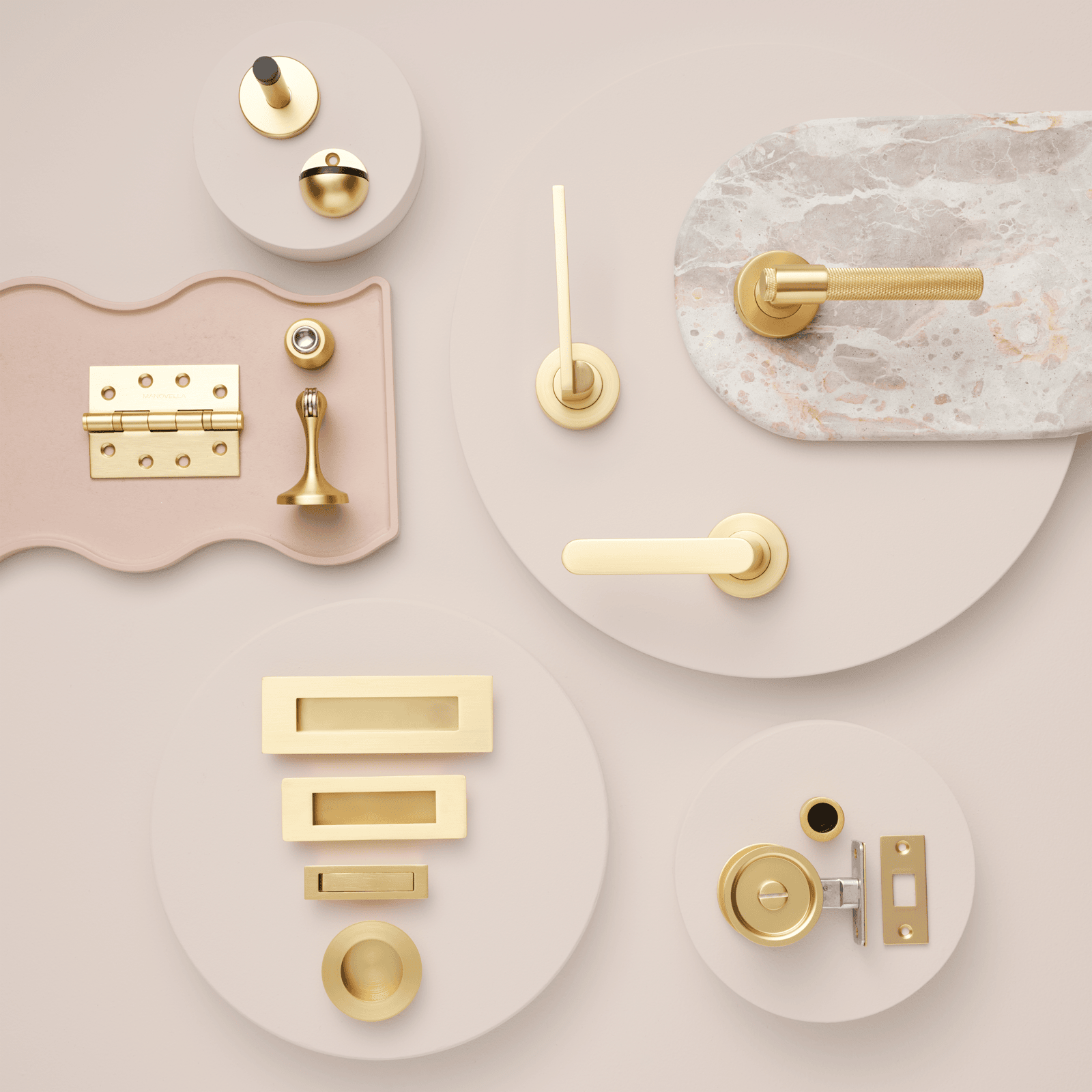
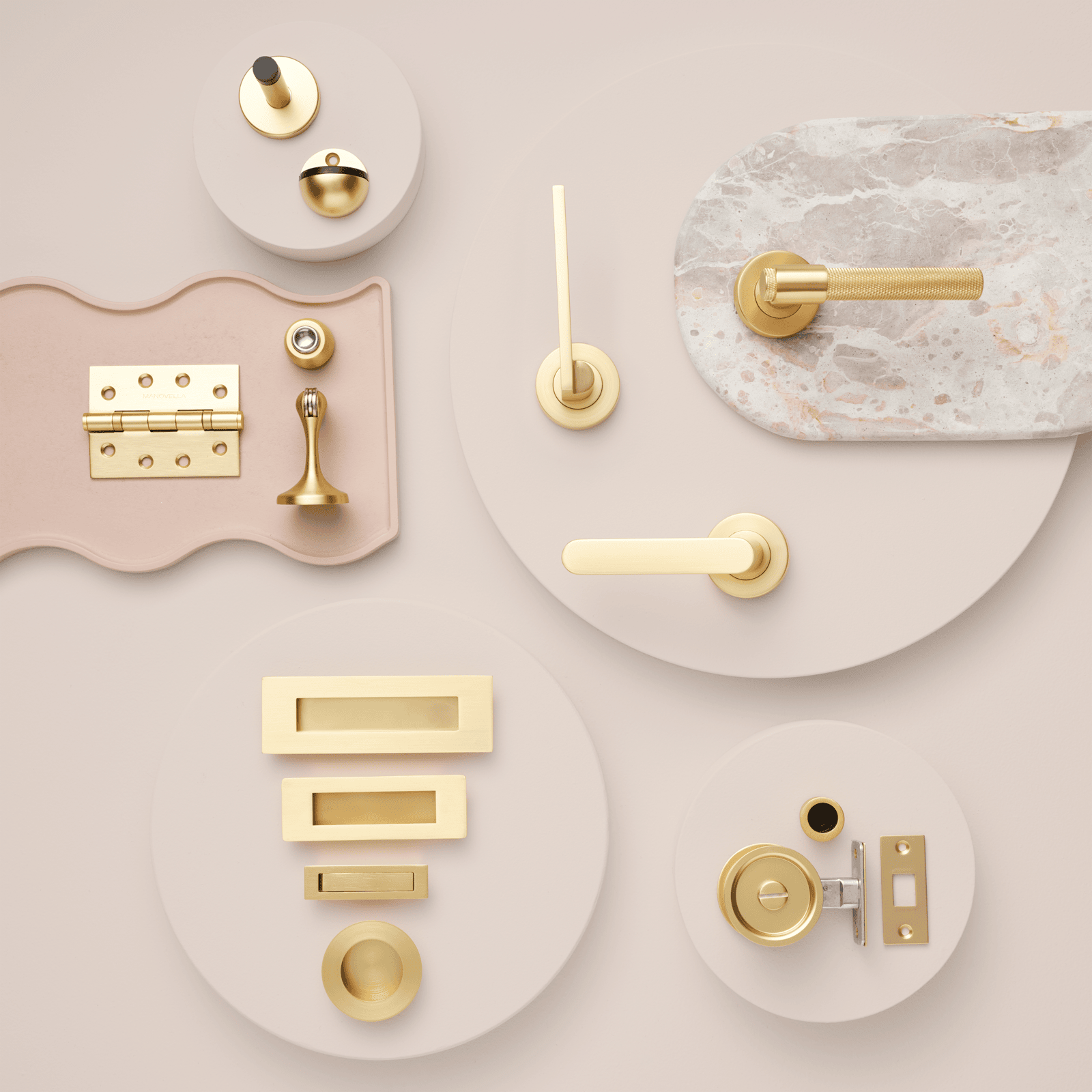
Metallurgy takes on emotional value in 2026. Satin brass, brushed bronze, and champagne gold and silver are the signature tones of the year, warm without being flashy, modern yet timeless. These finishes harmonize beautifully with natural materials like stone, oak, or linen-textured walls, creating a cohesive palette that feels secure, layered, and enduring.
The allure lies in the tactile glow: these metals catch light softly rather than reflecting it sharply. They bring warmth into minimalist interiors, adding a curated yet lived-in character.
|
Finish |
Design Mood |
Best Paired With |
Durability Level |
|
Satin Brass |
Warm luxury |
Walnut, terracotta, navy |
High |
|
Graphite/Gunmetal |
Contemporary depth |
Concrete, oak |
High |
|
Champagne Gold |
Soft elegance |
Light neutrals, linen |
High |
|
Matte Black |
Bold minimalism |
White or stone finishes |
Medium |
The Art of Mixing Finishes
A defining 2026 design statement is intentional layering, mixing hardware finishes to create depth and individuality. Designers no longer aim for perfect uniformity; instead, they curate harmonious variation.
For instance, interior levers in warm brass might complement cabinetry in brushed graphite or matte black. The key is coherence, not sameness, treating door handles as part of a home’s tonal palette rather than isolated components. Mixed metals, when balanced correctly, communicate sophistication and a designer’s touch.
Texture, Tactility, and the Sensory Experience
Hardware has become a sensory interface between people and place. The trend of knurled, reeded, and etched textures gives handles a crafted, almost artisanal quality. The tactile grip not only enhances comfort and prevents slippage but also creates micro-shadows that add visual depth.
Reeded patterns and knurled edges, once features of industrial machinery, are now considered premium details, blending design heritage with modern ergonomics. Textured handles also hide fingerprints and blemishes, maintaining a clean aesthetic for longer.
Ergonomics and the Pursuit of Comfort
Good design should be felt, literally. Homeowners in 2026 increasingly prioritize ergonomic levers that align with the natural curve of the hand. The weight, balance, and movement of a lever are now important decision factors, just as much as its finish or color.
Soft-close and smooth-return mechanisms have entered the premium residential market, eliminating harsh latch clicks and replacing them with fluid, whispered motion. This subtle engineering elevates day-to-day comfort, reinforcing the philosophy that true luxury is silent.
The Quiet Evolution of Smart Hardware
Smart home integration has matured into invisible ease. Modern smart handles and locks build advanced technology, from biometric sensors to proximity-based unlocking, directly into sleek, architectural profiles. The focus is discreet performance, not gadget display.
With Matter-over-Thread standards now mainstream, new builds and renovations alike are adopting ecosystem-ready door handles that synchronise seamlessly with lighting, climate, and home security systems. This shift from visible tech to ambient intelligence defines the next phase of smart living.

Sustainable Materials and Circular Design
Sustainability has become foundational, not optional. The top-tier hardware of 2026 prioritises recycled metals, low-VOC finishes, and powder coatings that extend the product’s life while minimising environmental impact. Brass remains a star performer for eco-conscious homeowners thanks to its infinite recyclability and long-lasting structural integrity.
This sustainable thinking aligns with the growing consumer mindset of buy less, buy better. Longevity is the new luxury, and modern door handles are built as heirloom-grade objects designed to age gracefully rather than be replaced.
Regional Resilience and Material Performance
For Australian homes, especially coastal environments, durability and climate-resilience drive hardware specification. Marine-grade alloys, stainless components, and corrosion-resistant finishes ensure longevity against humidity, salt, and UV exposure.
The modern expectation is clear: homeowners want hardware that feels luxurious, endures local conditions, and harmonises with Australia’s natural light and landscape-inspired palettes.
The Soul of Modern Hardware
As we step further into 2026, door handles have transcended pure functionality. They now express the emotional language of the home, softness, precision, confidence, and calm. The trends shaping this moment, Quiet Luxury, invisibility in design, tactile surfaces, and sustainable metals, represent more than fleeting fashion.
They signal a new era where architectural hardware becomes architecture itself, a seamless connection between object, material, and human touch.


