



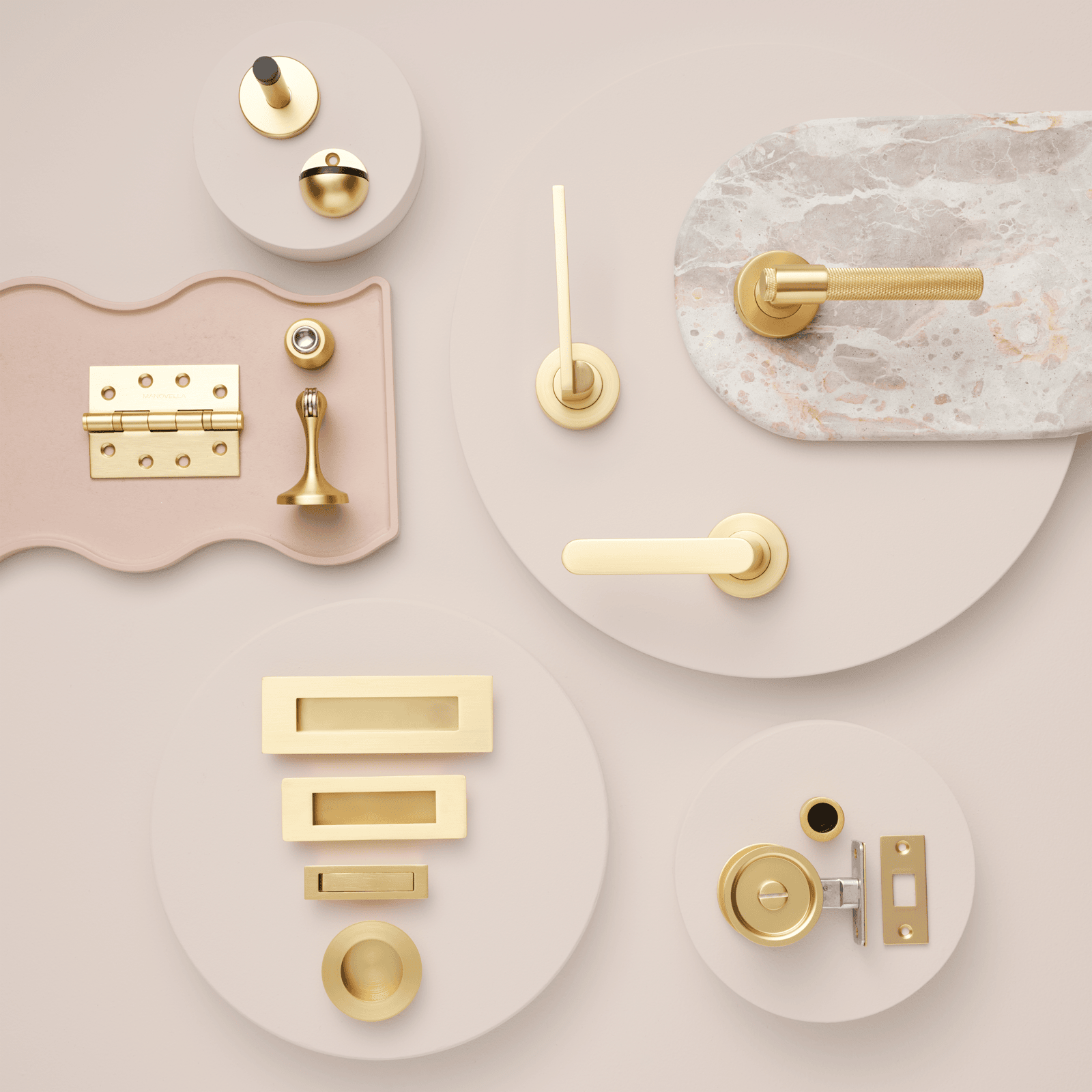
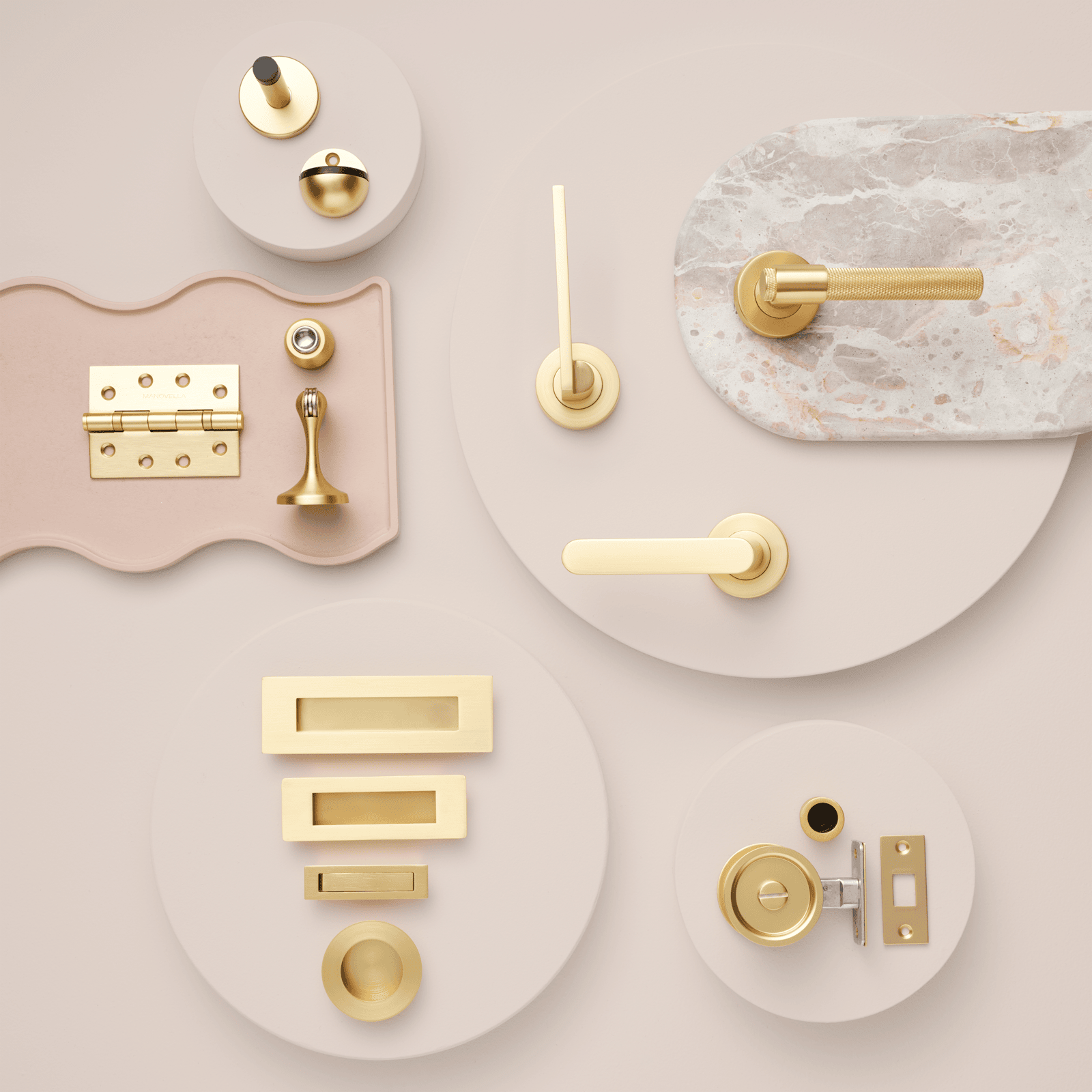


When selecting handles and hardware, the finish is the final touch that defines a room's character. In the luxury hardware market, two leading technologies provide that high-end look: Electroplating and Physical Vapour Deposition (PVD).
Both methods produce stunning results, but they offer different advantages depending on your project’s location, usage, and design aesthetic.

The Art of Electroplating: The Time-Honoured Classic
Electroplating has been the industry standard for luxury hardware for decades. It is a sophisticated electrochemical process where the hardware is submerged in a liquid bath. An electric current is used to bond a layer of decorative metal - such as nickel, chrome, or copper - onto the surface.
- The aesthetic: electroplating is renowned for its deep, authentic metallic lustre. It provides a classic glow that is difficult to replicate with other methods.
- The variety: it allows for a vast range of traditional finishes.
- The verdict: an excellent choice for interior doors and heritage-style projects where a traditional, high-quality metallic feel is the priority.

The Science of PVD: The High-Performance Alternative
PVD is a modern, high-tech coating process that takes place in a high-pressure vacuum chamber. Instead of a liquid bath, the finishing material is vaporised into a plasma and bonded to the hardware at an atomic level.
- Extreme durability: PVD is one of the hardest finishes available. It is virtually immune to the scratches and scuffs that can occur on high-traffic handles.
- Weather resistance: because the bond is so tight, PVD is exceptionally resistant to corrosion, making it the gold standard for coastal homes, humid bathrooms or alfresco areas.
- Design consistency: one of the biggest advantages of PVD is its colour consistency. Because the process is digitally controlled in a vacuum, it is much easier to match PVD handles with PVD taps and bathroom fittings from different suppliers, ensuring a perfectly cohesive look across your home.
- The verdict: the ideal option for high-use areas, outdoor entertainment areas, external doors, and modern bathrooms where colour matching and longevity are essential.
Electroplating vs PVD Comparison
|
Feature |
Electroplating |
PVD Coating |
|
Finish Character |
Deep, classic lustre |
Contemporary, crisp brilliance |
|
Process |
Traditional liquid bath |
Modern vacuum plasma |
|
Colour Matching |
High (within same batches) |
Excellent (across different fittings) |
|
Best Suited For |
Interior styling & heritage |
High-traffic, coastal & humid areas |
|
Durability |
High (Industry Standard) |
Extreme (Scratch Resistant) |
Finish Compatibility Chart: Matching Your Tapware
A common challenge for Australian renovators is matching Brushed Brass across different brands. Because PVD is a highly controlled process, our Manovella PVD handles are designed to coordinate seamlessly with popular Australian tapware brands.
|
Manovella PVD Finish |
Design Character |
Commonly Matches These Tapware Ranges |
|
Brushed Brass PVD |
A warm, vibrant golden tone with a sophisticated vertical brush. |
ABI Interiors (Brushed Brass), Phoenix Tapware (Brushed Gold), Fienza (Urban Brass), Linsol (Brushed Brass). |
|
Brushed Copper PVD |
A rich, earthy copper with deep rose undertones. |
Meir (Tiger Bronze), Fienza (Brushed Copper), ABI Interiors (Copper). |
Frequently Asked Questions
Is PVD better than Electroplating?
Neither is "better" in absolute terms; they simply serve different purposes. Electroplating offers a classic metallic depth that many designers prefer for luxury interiors. PVD offers an ultra-tough shield and superior colour matching, making it perfect for hardware that needs to withstand the elements or coordinate with tapware.
Why is PVD recommended for colour matching?
The nature of the PVD vacuum process allows for incredibly precise control over the finish. This means that a Brushed Brass PVD handle is far more likely to be an exact match for a Brushed Brass PVD tap, even if they come from different manufacturers. This takes the guesswork out of kitchen and bathroom design.
How do I maintain my hardware?
Both finishes are premium and should be treated with care. We recommend avoiding harsh chemical cleaners or abrasive scouring pads. A soft cloth with warm, soapy water is all you need to keep both Plated and PVD hardware looking brand new.
Why is PVD often chosen for coastal Australian homes?
In coastal areas, salt air can be aggressive towards metal. Because PVD bonds at an atomic level, it creates a surface that is much harder for salt and moisture to penetrate, preventing the pitting or tarnishing that can sometimes occur with standard finishes.
Does Electroplating peel?
High-quality, professional electroplating - like the range we carry - is engineered for longevity. While low-grade plating found in big-box retailers can sometimes peel, our premium plated hardware is designed to provide a durable, long-lasting bond that stands up to years of daily use.


